

Buying or selling property in Central Kentucky requires precise market navigation. According to recent industry reports, team-based brokerage models now handle over 42 percent of all residential transactions nationwide. This shift reflects a clear preference for collaborative expertise over solo representation. Homeowners increasingly recognize that shared resources directly impact closing timelines and final sale prices. Understanding these operational differences helps buyers and sellers make informed decisions before signing a listing agreement. (Lexington KY Real Estate)
Shared Resources and Expanded Market Reach
A coordinated brokerage structure distributes marketing costs across multiple digital channels. When a property enters the active listing pool, team members simultaneously deploy targeted advertising campaigns across regional platforms. This synchronized approach drastically reduces average days on market compared to solo operations. According to national housing data, collaborative marketing strategies consistently deliver faster sales cycles for both residential and luxury properties. Buyers benefit from immediate access to comprehensive property histories and neighborhood demographic reports. Sellers gain from continuous feedback loops that adjust listing parameters in real time.
Specialized Role Allocation and Workflow Efficiency
Transaction management requires distinct skill sets that rarely align within a single professional. Transaction coordination is the systematic management of contract deadlines, title company communications, and inspection scheduling. The lead negotiating agent focuses exclusively on offer structuring and counteroffer tactics. This division of labor eliminates communication bottlenecks during critical closing windows. According to industry compliance studies, specialized role allocation reduces administrative errors by nearly thirty percent. Clients experience smoother transactions because each professional operates within their certified scope of practice.
Local Community Integration and Neighborhood Expertise
Deep regional knowledge translates directly into accurate property valuations and targeted buyer matching. Experienced brokerage groups maintain active relationships with municipal planning departments, school district administrators, and local infrastructure developers. This network provides early warnings regarding zoning changes, road construction projects, and utility upgrades. According to regional economic forecasts, neighborhoods with active community engagement experience higher long-term appreciation rates. Properties located in established subdivisions like Andover Forest or Ashland Park benefit from this hyperlocal intelligence. Buyers receive precise guidance on neighborhood amenities, traffic patterns, and future development pipelines.
Transaction Risk Mitigation and Compliance Oversight
Complex purchase agreements demand rigorous document review and regulatory compliance monitoring. Compliance oversight is the rigorous document review and regulatory monitoring required before submission to title offices. Senior advisors cross-check financing contingencies, disclosure requirements, and inspection contingencies against state statutes. According to legal compliance reports, structured review processes significantly reduce post-closing litigation risks. Sellers avoid costly contract breaches by leveraging experienced negotiation teams. Buyers secure favorable terms through systematic risk assessment and contingency planning.
Pricing Strategy Accuracy and Data Modeling
Accurate valuation requires continuous analysis of comparable sales, active inventory, and seasonal demand shifts. Market valuation is the continuous analysis of comparable sales, active inventory, and seasonal demand shifts. Modern brokerage platforms utilize proprietary valuation algorithms alongside human market expertise. This hybrid approach eliminates emotional pricing biases that often derail successful transactions. According to national appraisal standards, data-driven pricing models consistently achieve closer-to-list-price outcomes. Properties receive strategic launch pricing that generates immediate buyer interest. Sellers maximize net proceeds by avoiding prolonged market stagnation.
Comparative Analysis of Service Models
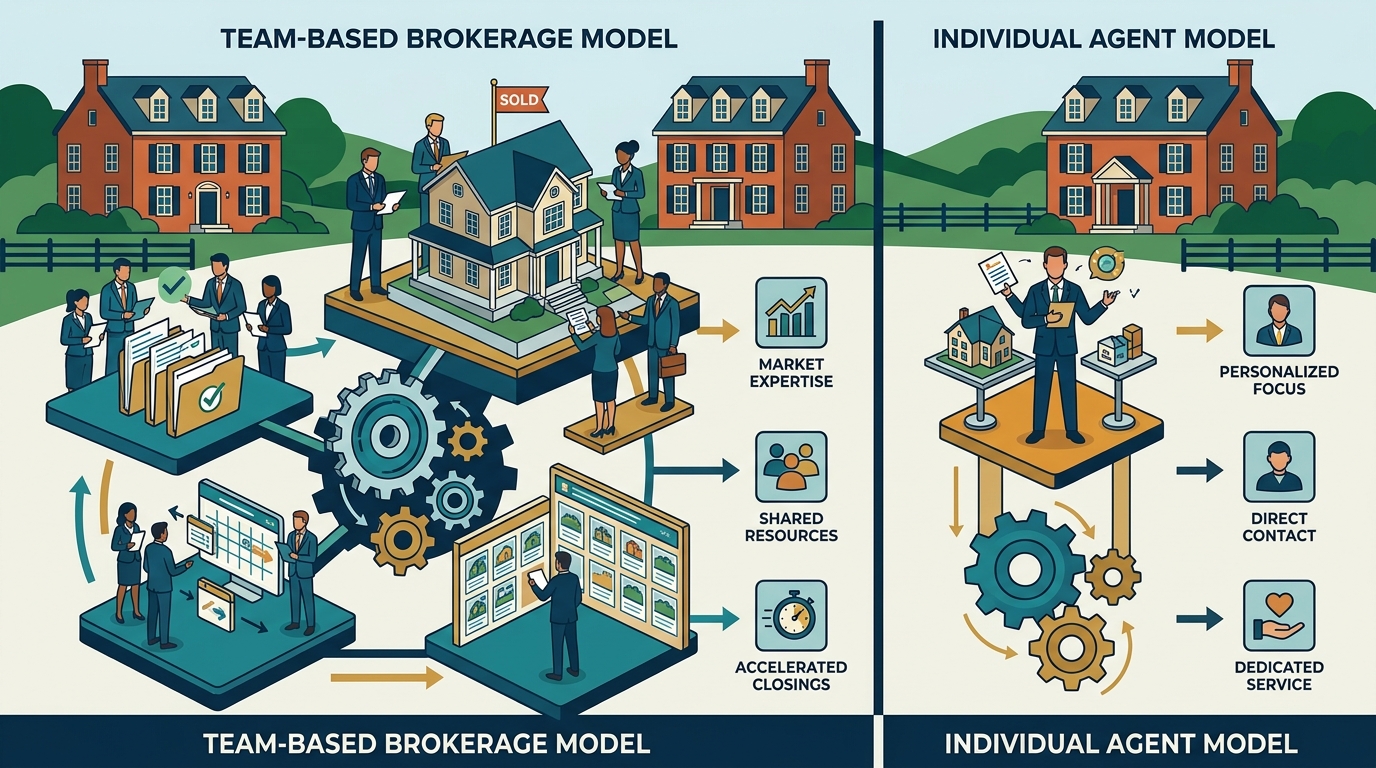
Selecting the right representation model depends on specific transaction complexity and personal preferences. Solo agents offer direct communication but often lack bandwidth for simultaneous marketing campaigns. Team structures provide distributed workload management and specialized skill sets. The following matrix outlines the operational differences between these two approaches.
| Service Component | Individual Agent Model | Team Brokerage Model |
|---|---|---|
| Marketing Coverage | Limited to single professional bandwidth | Distributed across multiple digital channels |
| Transaction Coordination | Handled by the primary agent | Dedicated administrative specialist |
| Local Market Intelligence | Relies on personal experience | Aggregated community data and planning contacts |
| Risk Management | Solo compliance verification | Multi-layer quality assurance protocols |
Key Takeaways
- Team-based brokerage models now handle over 42 percent of all residential transactions nationwide.
- Specialized role allocation reduces administrative errors by nearly thirty percent during complex closings.
- Properties in established subdivisions like Beaumont benefit from hyperlocal intelligence and active community engagement.
- Data-driven pricing models consistently achieve closer-to-list-price outcomes compared to emotional pricing strategies.
- Multi-layer quality assurance protocols significantly reduce post-closing litigation risks for all parties.
- Distributed marketing campaigns drastically reduce average days on market across all property types.
Frequently Asked Questions
How does a team brokerage handle multiple simultaneous transactions?
Team structures assign dedicated transaction coordinators to manage paperwork, scheduling, and compliance checks. This system allows lead agents to focus exclusively on negotiation strategy and client communication. Buyers and sellers experience consistent updates without waiting for a single professional to clear administrative backlogs.
What specific advantages do Lexington KY real estate teams offer?
Local teams maintain direct relationships with municipal planning departments, school district administrators, and infrastructure developers. This network provides early warnings regarding zoning changes, road construction projects, and utility upgrades. Properties receive precise guidance on neighborhood amenities, traffic patterns, and future development pipelines.
Can a solo agent match the marketing reach of a coordinated team?
Solo operations typically allocate limited bandwidth to digital advertising and open house scheduling. Coordinated teams deploy synchronized campaigns across multiple regional platforms simultaneously. This synchronized approach drastically reduces average days on market compared to solo operations.
How do team-based operations manage contract compliance and risk?
Senior advisors cross-check financing contingencies, disclosure requirements, and inspection contingencies against state statutes. This structured review process significantly reduces post-closing litigation risks for all parties. Buyers secure favorable terms through systematic risk assessment and contingency planning.
Is pricing strategy more accurate when handled by a team?
Modern brokerage platforms utilize proprietary valuation algorithms alongside human market expertise. This hybrid approach eliminates emotional pricing biases that often derail successful transactions. Properties receive strategic launch pricing that generates immediate buyer interest.
What should buyers expect during the initial consultation phase?
Prospective clients receive comprehensive property histories and neighborhood demographic reports. Sellers gain from continuous feedback loops that adjust listing parameters in real time. Both parties benefit from transparent communication protocols and documented next steps.
How do team structures impact final sale prices?
Data-driven pricing models consistently achieve closer-to-list-price outcomes compared to emotional pricing strategies. Sellers maximize net proceeds by avoiding prolonged market stagnation. Buyers secure favorable terms through systematic risk assessment and contingency planning.
Next Steps for Central Kentucky Homeowners
Transitioning to a collaborative brokerage model requires minimal effort and maximum strategic benefit. Our experienced professionals are ready to evaluate your specific property goals and market conditions. Visit our about page to learn more about our mission and team structure. Schedule your complimentary market analysis today and experience the advantages of coordinated representation.