

Buying a home is rarely just a financial transaction. It is a lifestyle pivot that dictates your daily routine, social circle, and long-term financial health. According to recent housing market data, the average time to find a suitable home has increased as buyers become more selective about neighborhood amenities and commute times. This shift means that a rushed decision often leads to buyer's remorse. The goal is not just to find a house, but to find a home that aligns with your personal values and financial reality. (Financial Health Frontiers)
Understanding Your Lifestyle Needs
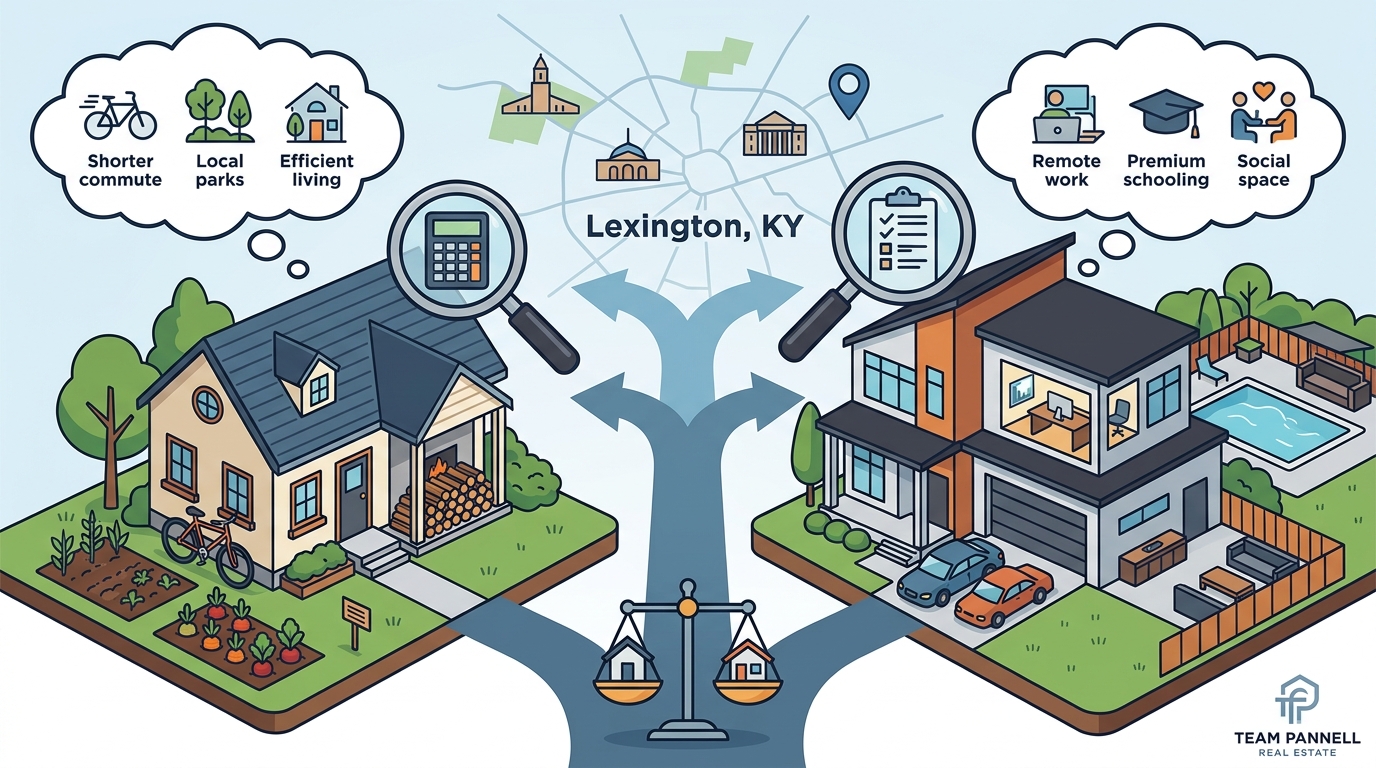
Before you look at a single listing, you must define what a "good day" looks like for you. This requires an honest audit of your daily habits. Do you work from home and need a dedicated office space? Do you have children who require access to specific school districts? Do you prefer the walkability of an urban center or the privacy of a suburban lot?
Lifestyle alignment is the foundation of long-term satisfaction. If you prioritize outdoor activities, a property near parks or trails in communities like Andover Forest or Andover Hill might be essential. If you value proximity to cultural events, the urban core near the UK Campus or downtown Lexington may be your ideal setting. These preferences are non-negotiable for many buyers.
Consider your future trajectory as well. A property that fits your needs today might not fit your needs in five years. Are you planning to expand your family? Do you anticipate aging in place? These factors influence the number of bedrooms, bathroom configurations, and single-story layouts you should prioritize.
Defining Your True Budget
Many buyers make the mistake of focusing solely on the monthly mortgage payment. This is a critical error. Your budget must account for the total cost of ownership, which includes property taxes, homeowners insurance, maintenance, and utilities. A comprehensive financial picture prevents overextension and ensures you can enjoy your home without financial stress.
Pre-approval is the first step in financial clarity. When you get pre-approved, a lender evaluates your income, debt, and credit history to determine exactly how much they are willing to lend you. This document gives you a clear price ceiling and makes you a serious buyer in the eyes of sellers. You can use our Mortgage Calculator to estimate your monthly costs before speaking with a lender. (Financial Health Frontiers)
It is also vital to understand the difference between the list price and the closing costs. Closing costs typically range from 2% to 5% of the loan amount. For a $300,000 home, this means setting aside $6,000 to $15,000 for fees, taxes, and insurance premiums at closing. Having these funds liquid and ready is just as important as your down payment.
Neighborhood Analysis and Community Fit
Location is the only immutable factor in real estate. You can change the paint, the flooring, and the layout, but you cannot change the neighborhood. Therefore, evaluating the community is as important as evaluating the house itself. Lexington and its surrounding areas offer a diverse range of neighborhoods, each with a distinct character and value proposition.
For example, Andover Forest offers a specific type of suburban tranquility with established tree lines and family-friendly streets. In contrast, Beaumont might appeal to those seeking a different architectural style or proximity to specific amenities. Each community has its own HOA rules, tax rates, and resale trends.
When analyzing a neighborhood, look beyond the homes. Visit the area at different times of the day. Check the noise levels, the traffic patterns, and the availability of local services. Are there grocery stores, hospitals, and schools within a reasonable distance? These logistical factors directly impact your quality of life.
Comparing Property Types
Once you have defined your lifestyle and budget, you must decide on the type of property that suits your needs. Lexington offers a variety of options, from single-family homes to condos and townhomes. Each type has distinct advantages and disadvantages regarding maintenance, privacy, and cost.
| Property Type | Maintenance Level | Privacy | Best For |
|---|---|---|---|
| Single Family Home | High | High | Families, long-term residents |
| Condo | Low | Medium | Budget-conscious buyers, low maintenance |
| Townhome | Medium | Medium | Urban professionals, first-time buyers |
| Luxury Estate | Very High | Very High | High-net-worth individuals |
Single-family homes typically offer the most land and privacy but require the most upkeep. Condos often include exterior maintenance in the HOA fees, making them ideal for those who want to minimize chores. Townhomes provide a middle ground, offering more space than a condo with less maintenance than a single-family home. Understanding these distinctions helps you narrow your search effectively.
Executing the Search Process
With your criteria defined, it is time to begin the active search. The modern real estate market moves quickly. Homes that are priced correctly and presented well often receive multiple offers within days. Therefore, having a streamlined search process is essential to avoid missing out on opportunities.
Utilize advanced search tools to filter listings based on your specific needs. Our property search allows you to filter by price, bedrooms, bathrooms, and specific neighborhoods. You can also use the Advanced Search feature to include custom criteria, such as lot size or year built.
Registering for a free account on our site enables you to save your favorite properties and receive instant email notifications when new listings hit the market. This proactive approach ensures you are among the first to view promising homes. Additionally, consider using the interactive map search to visualize properties in relation to your workplace, schools, and favorite amenities.
Working with a local expert is crucial during this phase. An agent like those at Team Pannell Real Estate has access to off-market listings and can provide insights into neighborhood trends that are not visible online. They can also help you navigate the complexities of making an offer and negotiating terms.
Key Takeaways
- Lifestyle First: Define your daily needs and future goals before looking at homes.
- True Budget: Calculate total cost of ownership, including taxes, insurance, and maintenance.
- Pre-Approval: Get pre-approved to understand your borrowing power and show seriousness to sellers.
- Neighborhood Fit: Visit communities at different times to assess noise, traffic, and amenities.
- Property Types: Choose between single-family, condo, or townhome based on maintenance preferences.
- Active Search: Use advanced filters and set up instant alerts to stay ahead of the market.
- Expert Guidance: Partner with a local team that understands the Lexington market deeply.
Frequently Asked Questions
How much house can I afford?
Your affordability is determined by your income, debt-to-income ratio, and credit score. A general rule is that your housing costs should not exceed 28% of your gross monthly income. However, a pre-approval letter from a lender will give you a precise number.
What is the difference between a pre-approval and a pre-qualification?
Pre-qualification is a casual estimate based on self-reported financial data. Pre-approval is a formal commitment from a lender after verifying your income, assets, and credit. Sellers prefer pre-approved buyers because it indicates a higher likelihood of closing.
How do I choose the right neighborhood in Lexington?
Consider your commute, school preferences, and lifestyle. Visit the neighborhoods you are interested in at different times of day. Talk to current residents if possible. Use our Community Guide to explore specific areas like Georgetown, Versailles, or the UK Campus area.
What are closing costs and who pays them?
Closing costs include fees for loan origination, appraisal, title insurance, and taxes. Typically, buyers pay 2% to 5% of the loan amount. However, in some cases, sellers may agree to contribute to closing costs as part of the negotiation.
Should I buy a new construction or a resale home?
New construction offers modern amenities and warranties but may lack established landscaping and community character. Resale homes often have mature trees and established neighborhoods but may require updates. Both options have distinct financial and lifestyle implications.
How long does the home buying process take?
The timeline varies based on market conditions and your readiness. From pre-approval to closing, the process typically takes 30 to 45 days. However, the search phase can take weeks or months depending on your criteria and inventory levels.
What is Earnest Money?
Earnest money is a deposit made by the buyer to demonstrate good faith when making an offer. It is held in escrow and applied toward your down payment or closing costs at closing. If you back out for a covered reason, you get it back. If you back out for an uncovered reason, you may lose it.
Start Your Journey
Identifying the right property is a journey that requires patience, clarity, and expert guidance. Team Pannell Real Estate is here to support you every step of the way. From your first consultation to the day you hand over the keys, we provide the local knowledge and personalized service you need to make a confident decision.
Contact us today to schedule a free market analysis or to discuss your specific home buying goals. Visit our Contact Page to get in touch with our team.